Introduction to Echo Tech
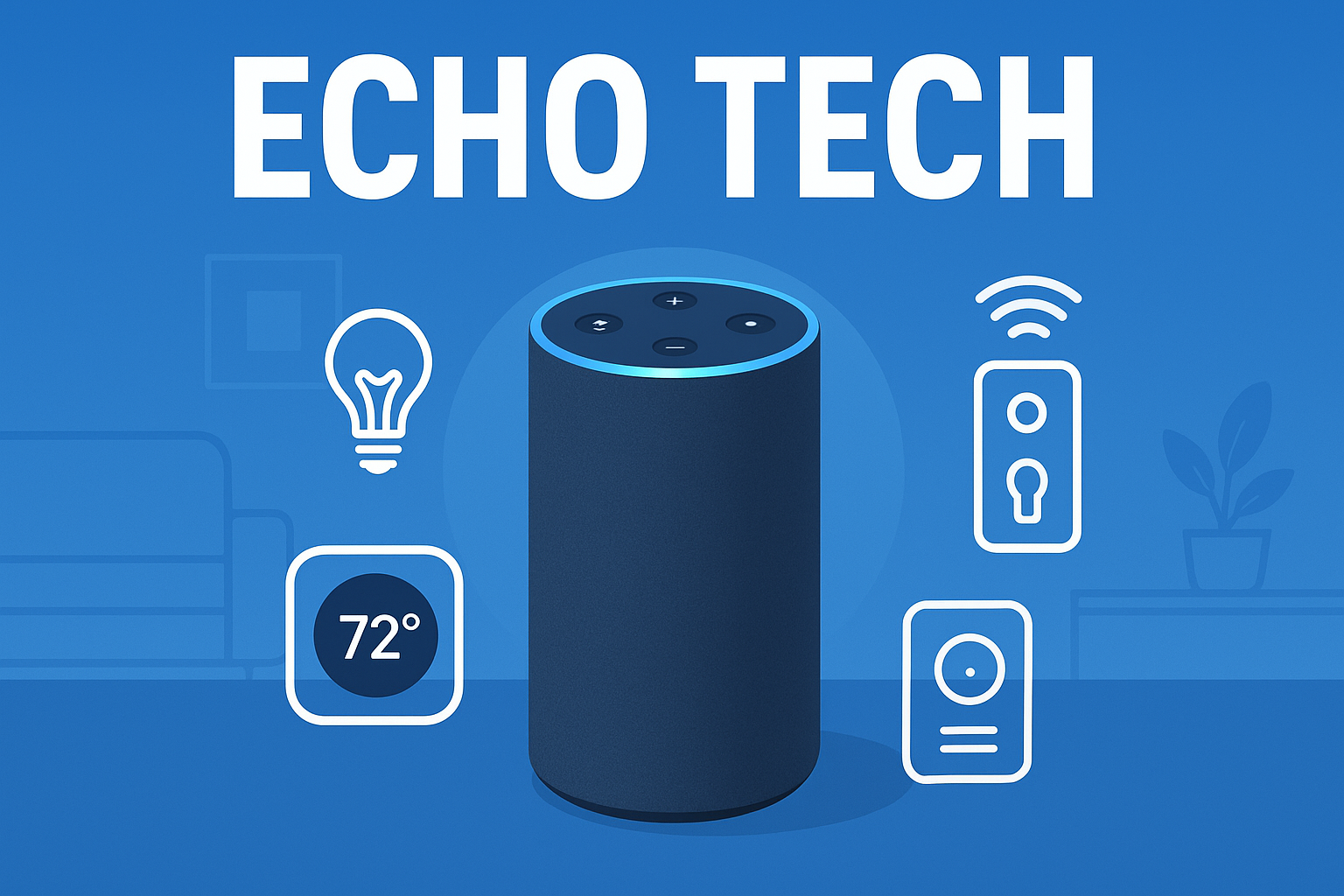
Echo Tech is more than just a smart speaker or a voice assistant—it’s a revolution in the way we interact with technology. In today’s fast-paced digital world, where convenience and automation are key, Echo Tech stands at the forefront of innovation. By blending artificial intelligence (AI), voice recognition, and machine learning, Echo Tech enables users to control their environments simply by speaking. Whether it’s turning on the lights, adjusting the thermostat, or playing your favorite music, Echo Tech simplifies everyday living.
Imagine walking into your home and saying, “Alexa, I’m home,” and watching your lights turn on, your favorite playlist start, and the temperature adjust to perfection. That’s the power of Echo Tech—it listens, understands, and acts. What sets it apart is its continuous learning ability; the more you use it, the smarter it gets.
Echo Tech isn’t just about comfort; it’s about connection. It integrates with a wide array of smart devices, making it a central hub for your digital lifestyle. It’s no surprise that millions of households and businesses worldwide have adopted Echo Tech to enhance productivity, save energy, and create seamless living experiences.
In the sections below, we’ll explore what Echo Tech really is, how it works, its real-world applications, and the remarkable ways it’s shaping the future of smart living.
What Is Echo Tech?
Echo Tech refers to the suite of smart devices developed by Amazon under the “Echo” brand, powered by the intelligent voice assistant, Alexa. It allows users to perform tasks through simple voice commands—ranging from setting reminders to controlling entire smart home systems. Essentially, Echo Tech bridges the gap between human speech and digital action.
The concept of Echo Tech revolves around three core elements: voice activation, connectivity, and automation. Through voice recognition and cloud-based AI processing, it translates spoken words into executable actions. Whether you’re asking for weather updates, shopping online, or managing your smart devices, Echo Tech serves as your personal assistant that’s available 24/7.
Over time, Echo Tech has expanded beyond the original Echo speaker into a complete ecosystem—featuring products like the Echo Show (with a screen), Echo Dot (compact version), and Echo Studio (premium sound). These devices can connect with thousands of third-party smart products, from Philips Hue lights to Ring doorbells.
In short, Echo Tech is not just a gadget—it’s a lifestyle upgrade. It enhances comfort, improves efficiency, and brings intelligence to the simplest of tasks, transforming ordinary homes into truly “smart” spaces.
The Evolution of Echo Technology
Echo Tech began its journey in 2014 with the release of the first Amazon Echo, which introduced Alexa to the world. At first, it was seen as a novelty—a speaker that could answer basic questions or play music. But soon, it became evident that Alexa’s capabilities could extend much further.
Over the years, Echo Tech has evolved into a powerful ecosystem. Each new generation brought improvements in sound quality, response speed, and integration with other devices. From smart home automation to business management tools, Echo Tech has diversified its applications across industries.
Key milestones include:
- 2016: Integration with third-party devices through Alexa Skills.
- 2018: Introduction of smart displays (Echo Show).
- 2020s: Expansion into healthcare, education, and industrial automation.
Today, Echo Tech represents a cornerstone of the Internet of Things (IoT) revolution. It continues to grow smarter through machine learning, adapting to user behavior and preferences. As it evolves, it brings us closer to a future where technology feels less like a tool and more like a companion.
Why Echo Tech Matters in Today’s World
In our increasingly connected society, Echo Tech plays a vital role in simplifying life and enhancing productivity. With remote work, online education, and smart homes becoming the norm, the demand for efficient, voice-driven technology has never been higher. Echo Tech answers this need by merging convenience with intelligence.
For individuals, it offers hands-free control over devices, helping multitaskers save time and energy. For businesses, it enables better communication, scheduling, and customer engagement. In healthcare, it supports patient monitoring and elderly care through voice-activated alerts and reminders.
Moreover, Echo Tech represents a step toward sustainability. Smart home integrations help reduce energy waste by automatically adjusting lighting and temperature based on usage patterns.
In essence, Echo Tech is not just about making life easier—it’s about making it smarter, greener, and more connected. It’s a reflection of how technology can seamlessly fit into our daily routines, transforming ordinary tasks into extraordinary experiences.
The Science Behind Echo Tech
At the heart of Echo Tech lies a blend of cutting-edge artificial intelligence (AI), machine learning (ML), and voice recognition technologies. These components work in harmony to make Echo devices responsive, intuitive, and capable of understanding human commands in natural language. When you speak to an Echo device, it’s not just hearing you—it’s interpreting, processing, and learning from your voice.
Every command you give follows a fascinating process. The device first captures your voice through its microphone array, which is equipped with noise-canceling sensors. These microphones isolate your voice from background sounds, even in noisy environments. Once captured, the command is sent to Amazon’s cloud-based servers, where Alexa’s AI processes the speech, determines intent, and executes the command—whether that’s playing music, turning off lights, or answering a question.
This process happens in milliseconds, creating a seamless interaction between user and device. The more you use Echo Tech, the better it becomes at recognizing your speech patterns, preferences, and even accents. Over time, it learns your daily routines—like when you wake up, when you go to bed, or which music genre you prefer in the morning—creating a personalized experience.
In essence, Echo Tech represents the future of intuitive computing. It’s not just about responding to commands; it’s about anticipating needs and acting proactively. This combination of AI, voice recognition, and IoT connectivity is what makes Echo Tech truly revolutionary.
How Echo Tech Works
The magic behind Echo Tech lies in its multi-layered architecture, designed to process and respond to human voice commands efficiently. Here’s a simplified breakdown of how it works:
- Voice Activation (“Wake Word” Detection) – Every Echo device continuously listens for its wake word, usually “Alexa.” Until it hears this word, it doesn’t record or process any information. This ensures privacy and responsiveness.
- Audio Capture and Processing – Once activated, the microphones capture the user’s voice, converting the audio into digital data.
- Cloud-Based Analysis – The data is securely transmitted to Amazon’s cloud servers, where powerful AI models analyze the command.
- Response Execution – After interpretation, Alexa sends the response back to the Echo device, which carries out the command—such as turning on lights or providing an answer.
What makes this process exceptional is its real-time efficiency. Even complex commands, like “Play relaxing jazz in the living room,” are understood contextually—Echo Tech identifies both the type of action (playing music) and the location (living room).
Behind the scenes, natural language processing (NLP) plays a critical role. It allows Alexa to understand not just words but their meanings, context, and intent. For example, if you say, “Alexa, I’m cold,” the system might interpret that as a cue to increase the thermostat temperature rather than just providing a weather update.
Echo Tech’s brilliance lies in this ability to bridge human communication with machine logic, making everyday interactions smarter and more human-like.
The Role of Artificial Intelligence (AI)
Artificial Intelligence is the backbone of Echo Tech. It powers every function, from recognizing speech to personalizing responses. Through AI, Echo devices continuously learn from user interactions, refining their understanding and improving accuracy over time.
When you ask Echo Tech to perform a task, AI-driven algorithms analyze your request using contextual understanding. This means Echo Tech can distinguish between similar commands, adapting to your preferences. For example, if you often say, “Alexa, play music,” and prefer pop songs, it learns that pattern and starts prioritizing your favorite playlists automatically.
AI also enables predictive assistance—anticipating what you might need before you ask. For instance, if you frequently check traffic in the morning, Alexa might start offering traffic updates unprompted at that time of day.
Beyond personal use, AI integration in Echo Tech extends to areas like smart home optimization, energy efficiency, and security monitoring. It detects anomalies (like unusual movement or changes in energy use) and alerts you instantly.
Ultimately, AI is what makes Echo Tech intelligent rather than just functional. It transforms it from a simple voice assistant into an adaptive digital companion—one that grows smarter with every interaction.
The Integration of Voice Recognition and Machine Learning
Voice recognition is what gives Echo Tech its “ears,” while machine learning (ML) provides its “brain.” Together, they form the dynamic duo that powers intelligent interaction.
Voice recognition allows Echo devices to identify who is speaking. Through voice profiles, Echo Tech can differentiate between family members, customizing responses accordingly. For example, if you say, “Alexa, play my playlist,” it knows whose music to play. This personalization creates a more seamless experience for households and offices alike.
Machine learning, on the other hand, is what enables Echo Tech to evolve. It learns from patterns—what commands you give most often, at what times, and in what contexts. Over time, it becomes more efficient and predictive.
For instance:
- If you often say, “Alexa, turn on the lights” around sunset, it might start doing it automatically.
- If you always ask for a weather update before leaving home, it may begin offering that proactively.
This learning happens quietly in the background, making Echo Tech feel increasingly intuitive. And since the system is cloud-based, updates and improvements are rolled out regularly, meaning Echo devices keep getting smarter long after purchase.
In short, the combination of voice recognition and machine learning transforms Echo Tech from a reactive tool into a proactive digital assistant—one that listens, learns, and adapts to your life.
Applications of Echo Tech
The potential of Echo Tech extends far beyond simple voice commands. It has transformed homes, workplaces, healthcare, and even education systems. The applications are vast and constantly expanding as technology advances.
At its core, Echo Tech serves as the control center for smart ecosystems. From smart lighting and thermostats to entertainment systems and security cameras, Echo Tech provides centralized control through voice interaction. But its influence doesn’t stop there. In healthcare, for example, Echo devices assist patients with reminders for medication or appointments. In businesses, they streamline scheduling and communication tasks.
The most exciting aspect of Echo Tech is its versatility—it adapts to nearly any environment. Whether you’re managing a smart home, optimizing office productivity, or enhancing accessibility for people with disabilities, Echo Tech plays a key role in bridging convenience with intelligence.
In the following sections, we’ll explore how Echo Tech is transforming various sectors, starting with the one closest to home—smart living spaces.