
Introduction
Ever feel like you’re digging through a digital jungle just to find a solid JavaScript trick? If you’re looking to cut through the noise and get straight to the good stuff, there’s a neat little hack you might not be using yet: filetype:pdf javascript astuces. Yeah, it’s not magic—but it’s pretty close. Let’s dive into this handy search technique and how it can unlock a treasure trove of high-quality JavaScript content.
Understanding the Power of Search Operators
What Does “filetype:pdf” Mean?
This Google search operator tells the engine to look only for PDF documents. Instead of pointing you to endless blog posts or spammy forums, it zooms in on documents with .pdf extensions—usually guides, eBooks, manuals, or slides.
Why Combine It with “JavaScript astuces”?
“Astuces” is French for “tips” or “tricks.” Combine it with “JavaScript” and the PDF filter, and you’re likely to pull up high-quality, often overlooked documents packed with developer hacks.
Mastering Google Search Operators
The Filetype Operator Explained
Typing filetype:pdf into your search tells Google: “Hey, show me only PDF files.” It narrows the results massively, helping you avoid fluff.
Other Useful Search Operators to Know
site:– Limit search to a specific website.inurl:– Look for keywords in the URL.intitle:– Find pages with certain words in the title.cache:– View a site’s cached version.
Real-Life Example
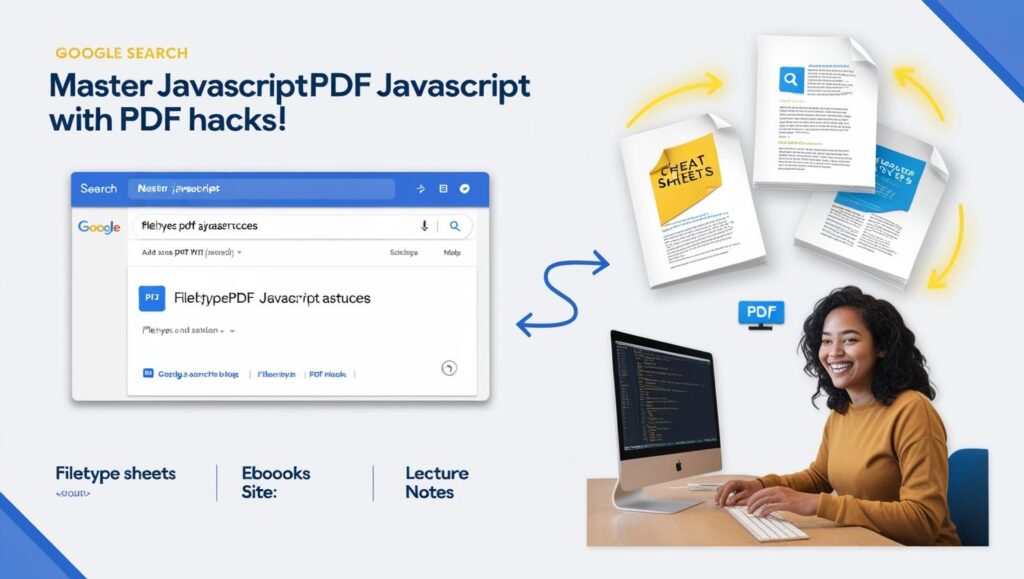
Search: filetype:pdf javascript astuces site:edu
Boom. You’ve just asked Google to find JavaScript PDF tips hosted on educational websites. Pretty slick, right?
Why PDFs Matter in Learning JavaScript
Advantages of PDF Format
PDFs are portable, printable, and often more organized than blog content. They usually come from vetted sources like professors, devs, or experienced educators.
Offline Access and Structure
Once downloaded, no internet required. Plus, you get structured chapters, diagrams, and code blocks in one tidy place.
Curated Content Wins
Unlike scrolling through sketchy Reddit threads, PDFs often give you the distilled juice—no fluff.
Best Practices for Searching JavaScript Tips in PDF Format
Using “filetype:pdf javascript astuces” Effectively
Try variations like:
filetype:pdf javascript astuces performancefiletype:pdf javascript astuces dom
Add More Keywords
Get specific. Use terms like:
- “async”
- “event loop”
- “debugging”
- “front-end”
Language-Specific Searches
Searching in French? “Astuces” is your keyword. Prefer English? Try “tips” instead.
Bookmark and Organize
Use tools like Raindrop.io or Evernote Web Clipper to save your PDF finds.
Top Types of JavaScript PDF Resources You’ll Find
Cheat Sheets
Quick reference guides that condense complex syntax into handy tables.
Tutorial Guides
Step-by-step projects for building real-world apps.
Books & eBooks
In-depth reading, often free from authors or schools.
University Lecture Notes
Goldmine for academic-level explanations.
Developer Docs
From MDN-style guides to internal team documentation.
Understanding “Astuces” – What Kind of Tips You Can Expect
Performance Hacks
Tips to make your code leaner and faster.
DOM Manipulation Tricks
Smart ways to interact with web pages dynamically.
Async/Await Secrets
How to avoid callback hell and write cleaner async code.
Debugging Like a Pro
Console tricks, breakpoints, and beyond.
Hidden Gems – Where to Find JavaScript PDFs
GitHub Repositories
Search repos tagged with “JavaScript PDF” or “cheatsheet”.
Academic Sites
Use site:harvard.edu or site:mit.edu to pull up smart content.
Developer Blogs
Many devs share their eBooks or slides from meetups.
Free Libraries
Sites like PDFDrive, ResearchGate, and Academia.edu.
Tools to Manage Your PDF Collection
Use Notion or Evernote
Create your own knowledge base with searchable PDF storage.
PDF Readers with Annotations
Try apps like Adobe Acrobat or Foxit to highlight and comment.
Convert PDFs to Editable Formats
Use tools like PDFescape or Smallpdf to tweak the content.
Tips to Create Your Own JavaScript PDF Cheatsheet
Collect Your Snippets
Use VS Code or Gist to save top code tips.
Markdown to PDF Tools
Use Obsidian or Pandoc to turn markdown into beautiful PDFs.
Share Your Knowledge
Upload your cheat sheet to GitHub or a dev blog.
SEO Benefits of PDFs for Developers
PDFs Can Rank in Google
Yep, if optimized well, your PDF might just show up in search.
Add Keywords
Use “JavaScript astuces” in titles, headers, and footers.
Share for Backlinks
Offer them on forums and blogs for link juice.
Common Pitfalls and How to Avoid Them
Outdated Content
Always check the date or JS version used.
Poor Formatting
Some PDFs are just scans—skip those.
Mismatched Languages
Make sure the doc’s language matches your comfort zone.
How to Keep Your JavaScript Skills Sharp
Follow Series
Some authors publish part 1, 2, 3 style guides—subscribe!
Practice Tips
Don’t just read—code along!
Build Projects
Take a tip and use it in a real project today.
Enhancing Productivity with JavaScript Tricks
Automate Tasks
Use scripts to auto-fill forms or sort data.
Browser Extensions
Write your own Chrome plugins using tips from PDFs.
Debug Faster
Use smart breakpoints and log styling.
Community and Collaboration
Share on Forums
Found a gem? Post it on Reddit or Stack Overflow.
Collaborate
Use Notion or Google Docs to build community PDFs.
Get Feedback
Ask dev peers what they think of your cheatsheets.
Conclusion
If you’ve never tried typing filetype:pdf javascript astuces into Google, you’re seriously missing out. It’s one of the best-kept secrets for finding high-value, digestible, and often overlooked resources. From cheat sheets to academic lectures, PDFs can be your silent mentor in the JavaScript world. So go on, start exploring. The best tricks might be hiding just a few clicks away.
FAQs
1. What does “filetype:pdf javascript astuces” actually do?
It filters Google results to show only PDF files that include JavaScript tips (especially in French).
2. Where can I find the best JavaScript PDFs?
Check GitHub, university websites, developer blogs, and PDF libraries like PDFDrive.
3. Are JavaScript PDFs better than online tutorials?
They’re often more organized and in-depth, especially for offline use.
4. Can I trust tips found in random PDFs?
Verify the author or source. Academic and well-known dev authors are usually reliable.
5. How do I make my own JavaScript PDF guide?
Gather your code snippets, write them in markdown, then convert to PDF using tools like Obsidian or Pandoc.